The surveillance technology Canada's public bodies operate
What Canada's police services, the RCMP under federal and provincial contract, and national operators run on the public record: automated licence plate recognition (ALPR), facial recognition, body-worn cameras, and cell-site simulators, with a citation behind every entry. By province and territory; the oversight around each system is the next layer of the record. Part of a worldwide record that so far covers the United States, the United Kingdom, Ireland, Australia, Canada, New Zealand, and the Netherlands.
The observatory
Deployments on the public record, aggregated by province and territory. Filter by technology; select a province or territory for its full record. National programmes are listed under national operators below.
Source: the public record. Canadian police-force and government publications, and federal Office of the Privacy Commissioner findings; per-entry citations on each record · retrieved July 2026
By province and territory
Provinces
| Province / territory | Deployments |
|---|---|
| British Columbia | 2 |
| Ontario | 2 |
| Alberta | 1 |
| Quebec | 1 |
| Saskatchewan | 1 |
| Manitoba | 0 |
| New Brunswick | 0 |
| Newfoundland and Labrador | 0 |
| Nova Scotia | 0 |
| Prince Edward Island | 0 |
Territories
| Province / territory | Deployments |
|---|---|
| Northwest Territories | 0 |
| Nunavut | 0 |
| Yukon | 0 |
National operators
Programmes run by national bodies apply across provinces and territories; they are recorded once here rather than per province.
| Operator | Deployments |
|---|---|
| Royal Canadian Mounted Police | 3 |
| Canada Border Services Agency | 0 |
The technologies in Canada
Counts are Canadian deployments on the public record; a zero means none on record, not necessarily none in operation.
ALPR
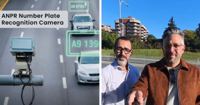
Automated licence plate readers (ALPR): camera systems that automatically capture, read, and log vehicle licence plates with location and time, producing a searchable record of vehicle movements.
3 on recordFixed cameras & RTCC
Agency-operated fixed video cameras and the real-time crime centers (RTCC) that aggregate live and recorded feeds for monitoring.
1 on recordFace recognition
Software that matches faces in images or video against a reference database to identify or verify individuals.
3 on recordDrones / UAS
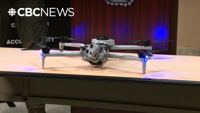
Uncrewed aerial systems (UAS), commonly called drones, operated by an agency for overhead observation, imaging, or sensing.
none on recordGunshot detection
Networks of acoustic sensors that detect and locate suspected gunfire and alert an agency.
none on recordBody-worn & dashcam
Officer body-worn and in-vehicle dashboard cameras that record encounters; public access to the footage is frequently restricted.
2 on recordDoorbell & camera registry
Programs that give an agency access to privately owned camera footage: doorbell-camera partnerships, citizen camera registries, and private-camera integration platforms.
none on recordCell-site simulators
adjacentDevices that mimic cell towers to locate or identify nearby mobile phones. They are often called Stingrays, or IMSI catchers after the international mobile subscriber identity (IMSI) number that identifies each phone on a network. Adjacent: communications surveillance outside the visual/sensor core.
1 on recordPredictive policing
adjacentSoftware that forecasts where crime may occur or who may be involved, to direct policing. Adjacent: analytics rather than a sensing deployment.
none on recordSocial-media monitoring
adjacentTools that collect and analyze public social-media activity for an agency. Adjacent: open-source/communications monitoring outside the visual/sensor core.
none on recordFusion & investigative platforms
adjacentThird-party platforms that fuse data across sources, sometimes including other surveillance feeds, for law-enforcement search and analysis, sold or licensed to multiple agencies rather than built by any one of them: examples include Palantir, Peregrine Systems, C3.ai, and SoundThinking's CrimeTracer (formerly Coplink X). Adjacent: an analytics layer that sits above the surveillance feeds this site otherwise tracks, rather than a sensing deployment of its own.
none on recordNews coverage
Recent coverage naming a Canadian province or territory, a police force, or a national operator.





About this record
Canada's deployment data is compiled from the public record: police force and government publications, and federal Office of the Privacy Commissioner findings. Each entry keeps its citation. The oversight around each system is the record's next layer, built from requests under Canada's federal and provincial access to information laws; see the Canada records-law analysis. Until a body's records arrive, its oversight status reads not yet requested. Full notes on the methodology page.